If you’re just starting out with charging your electric car at public charging points, choosing the right EV cable can seem complicated. With different types of connectors, charging powers and vehicle standards, it’s worth familiarising yourself with a few basic principles before making a purchase. In this guide, we explain what to look out for to ensure you choose a cable that suits your vehicle, how you use it and the locations where you most often plan to charge your car.
Why is having your own electric vehicle charging cable an essential accessory today?
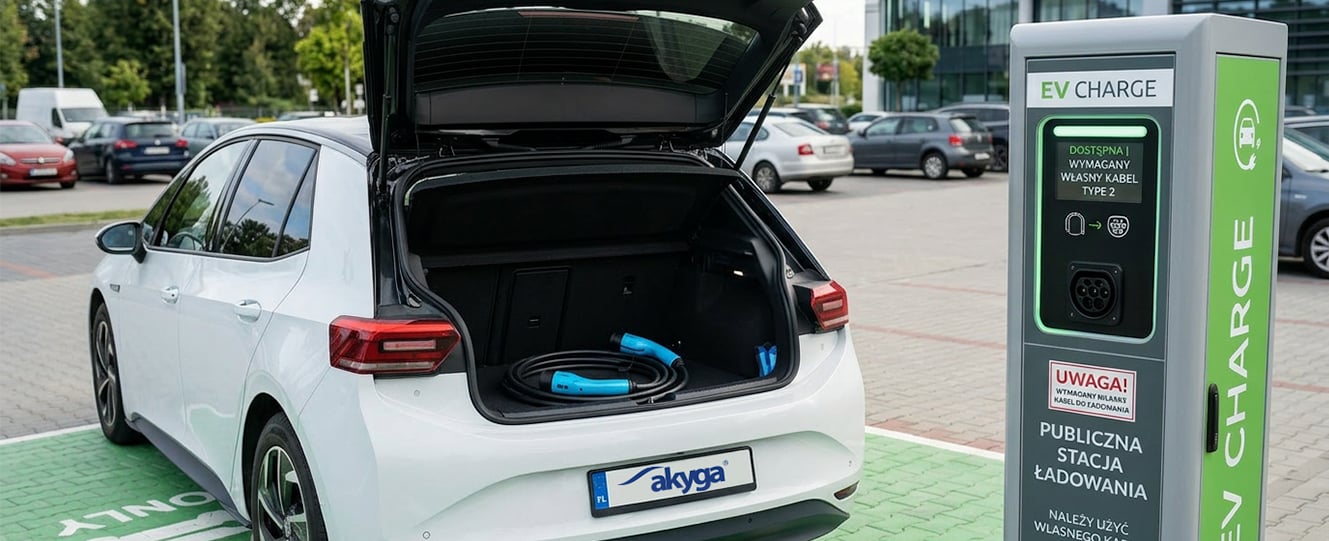
An increasing number of public 11–22 kW AC charging points in Poland, as well as across Europe, operate without a built-in cable. This solution reduces the cost of maintaining the stations and minimises the risk of cable theft; however, for drivers, it means they must use their own cable. According to EAFO data, in 2024 there were over 550,000 public AC charging points in the European Union, and in Poland, chargers with a power output of up to 22 kW are among the most popular types of infrastructure. It is therefore worth carrying a Type 2 cable with you, which allows you to use such stations conveniently — both on a day-to-day basis and when travelling.
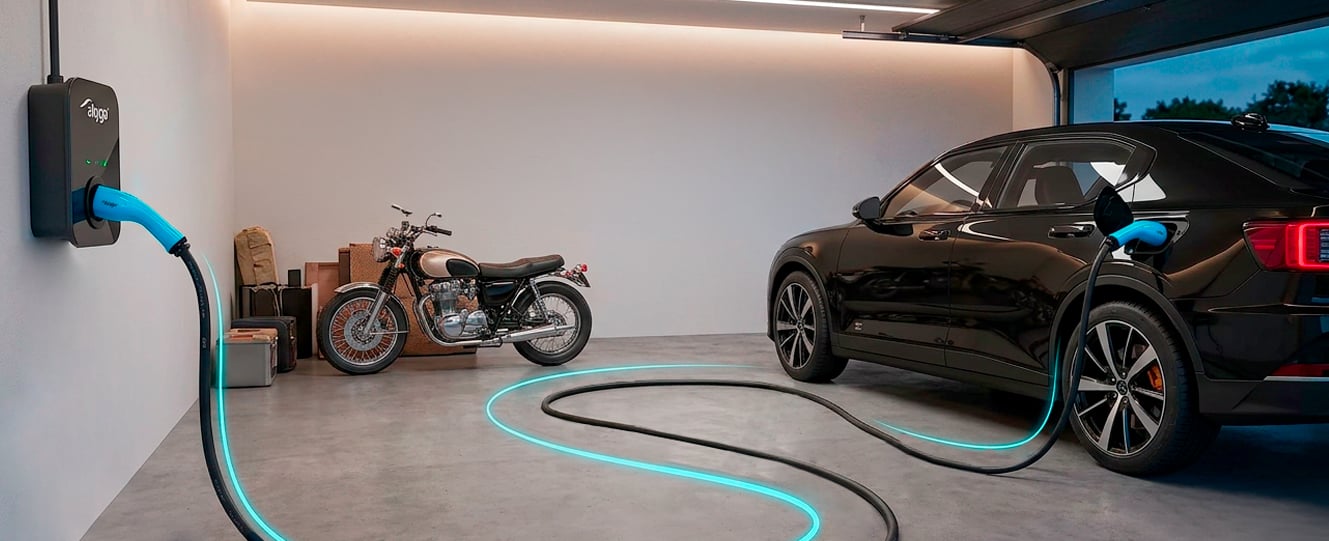
What should you look out for when choosing a charging cable for an electric car at an AC charging station?
-
Check the plug type in your car – most new models, such as the VW ID, Hyundai, Kia, BMW and Renault, use Type 2. Older Nissan Leafs, cars from the US and some plug-in hybrids may have Type 1.
-
Check the charging stations in your area – at public AC stations in Poland, you’ll most commonly find Type 2 sockets.
-
Check the power rating of your on-board charger – the power ratings of electric car charging cables in Europe are most commonly 7.4 kW, 11 kW or 22 kW and should be compatible with the maximum power rating of your car’s on-board charger.
-
Choose the right cable length – the most common lengths are 5, 6, 7, 8 and 10 metres.
-
Assess the quality – look for certifications, cable cross-section, moisture resistance, safety features and high-quality workmanship.
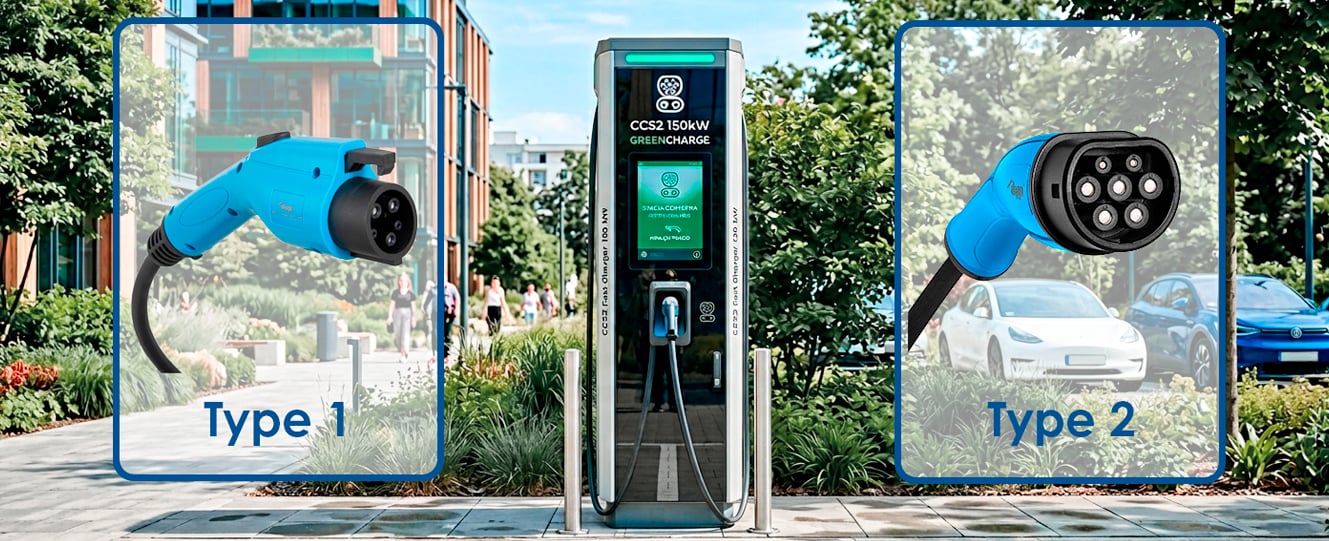
Connector types and standards – do you need a Type 2 cable or a Type 1 cable?
The choice of electric vehicle charging cable depends on the vehicle’s connector and the standard at the charging point. Type 2, compliant with IEC 62196-2, is the standard AC charging standard in Europe. A Type 2 EV charging cable allows for three-phase charging and supports charging power levels of up to 22 kW.
Type 1, also known as J1772, is a single-phase solution. A Type 1 EV charging cable allows charging at up to 7.4 kW and is mainly used in car models from the Asian region and imports from the USA.
When should you choose a Type 2 / Type 2 cable?
Choose this if your EV has a Type 2 connector. It is the most versatile cable for charging electric cars at public charging points in Poland, Germany, the Czech Republic and Slovakia. If you plan to charge frequently at 11–22 kW charging points, a three-phase cable will be a more future-proof option.
When should you choose a Type 2 / Type 1 cable?
This cable is for cars with a Type 1 socket on the vehicle and a Type 2 socket on the charger. It allows you to charge an electric car from the US or Japan without bulky adaptors. It is a practical solution for European AC infrastructure. Importantly, this cable is only available in a single-phase version.
Technical specifications of the charging cable – what should you look out for to ensure fast and safe charging of your electric car?
-
Charging power: an 11 kW cable is suitable for smaller batteries, whilst a 22 kW cable is better for larger battery capacities. The charging cable’s power rating should match the maximum power output of the car’s on-board charger to ensure efficient charging.
-
Current and number of phases: the cable should be matched to the maximum charging power supported by both the car and the charging station. A 32 A single-phase cable delivers a power output of approximately 7.2–7.4 kW, whilst a 32 A three-phase cable allows charging at up to 22 kW. The higher the amperage and the number of phases supported, the greater the possible charging power, provided that both the vehicle and the charging point are capable of handling it.
-
Compatibility: a 22 kW cable will work with a 7.4 kW car, but it will not increase the charging power beyond the capabilities of the on-board charger.
-
Safety: the cable cross-section and the quality of the connectors are crucial. Choosing the right cable for charging an electric car is key to ensuring efficient and safe charging.
Cable length – why is 6 metres the sweet spot?
The length of a standard charging cable ranges from 5 to 7 metres, which allows for easy manoeuvring regardless of the socket’s location. 6 metres is usually sufficient when the car’s socket is on the opposite side to the charging point, whilst ensuring the cable does not get tangled under the car. A longer cable may be needed for an electric delivery van, but for most drivers it is an unnecessary expense.
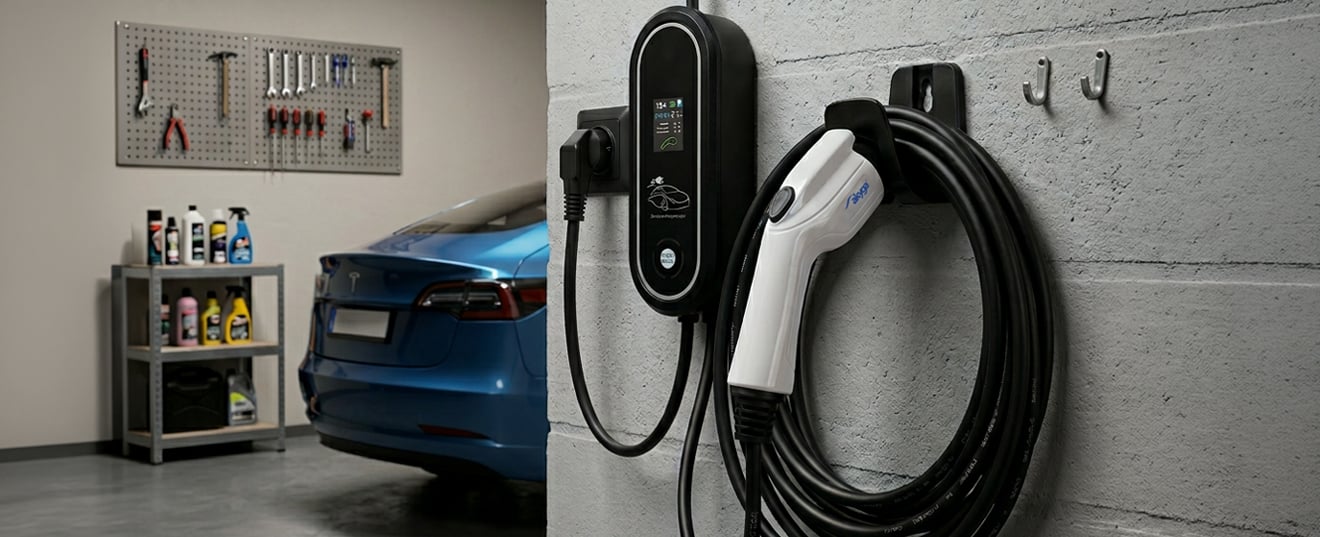
Water resistance rating and resistance to outdoor conditions
When charging your car outdoors, the cable is exposed to rain, snow, damp and fluctuating temperatures. It is therefore worth paying attention to the cable’s build quality, its water resistance rating and the robust protection of its connectors. A well-chosen cable should be weather-resistant, convenient for everyday use and fitted with durable end caps that protect the contacts from dirt and moisture. This is important not only for comfort, but above all for the safety and reliability of the charging process.
Akyga cables for charging electric cars – which model should you choose in practice?
Akyga® currently offers three models for the most common AC charging scenarios. Each is 6 m long and has a maximum load current of 32 A. Furthermore, it is possible to order a cable of any length and with any plugs, which will be custom-made by our technical department. Simply contact us with your requirements. Two variants are available from our ready-made solutions: single-phase and three-phase, allowing the cable to be perfectly tailored to the user’s individual needs.
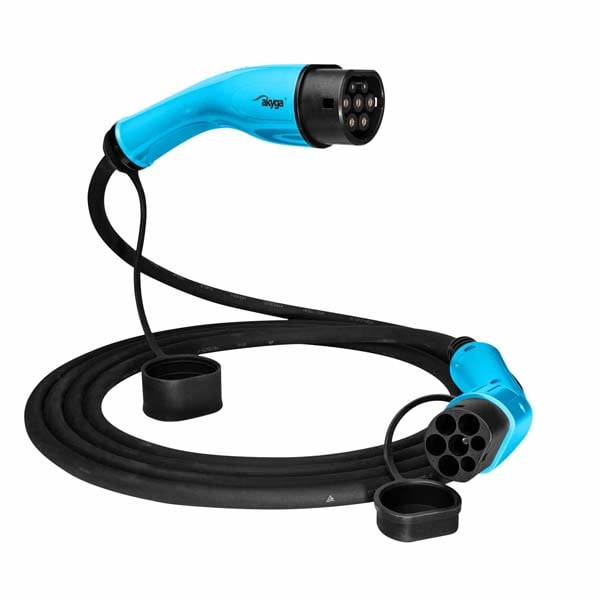
AK-EC-16 – Type 2 / Type 2 cable, 3-phase, up to 22 kW, 6 m
The AK-EC-16 is the best choice for cars with an on-board charger rated at 11–22 kW. The three-phase design, 32 A current rating and support for power up to 22 kW allow you to make the most of public AC charging stations. Two Type 2 connectors ensure compatibility with the European charging standard, whilst the 6 m length makes it easy to connect your car conveniently, even when the socket is further away from the vehicle. This is a practical solution for drivers who regularly use public charging infrastructure or plan to travel across Europe.
AK-EC-09 – Type 2 / Type 2 cable, single-phase, up to 7.2 kW, 6 m
The AK-EC-09 is a practical choice for electric cars with an on-board charger rated at around 7.2–7.4 kW, as well as for many plug-in hybrids. Its single-phase design, 32 A current rating and power output of up to 7.2 kW make this cable well-suited for use with a home wallbox, as well as for occasional charging at public AC stations without a built-in cable. The 6 m length makes it easy to connect your car comfortably in a variety of parking situations.
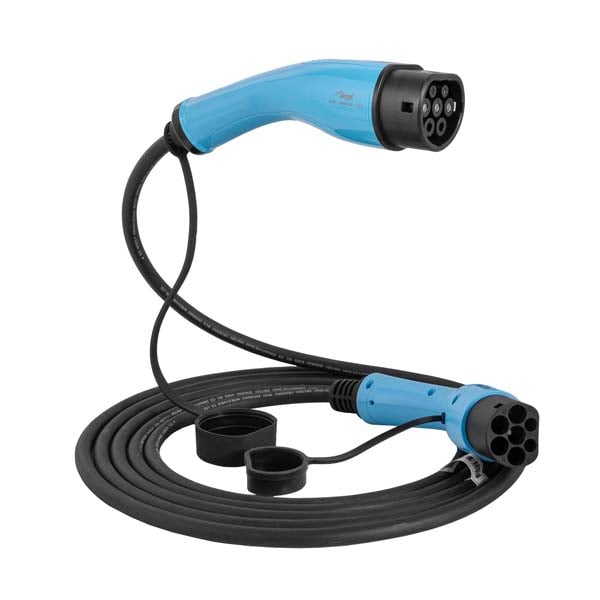
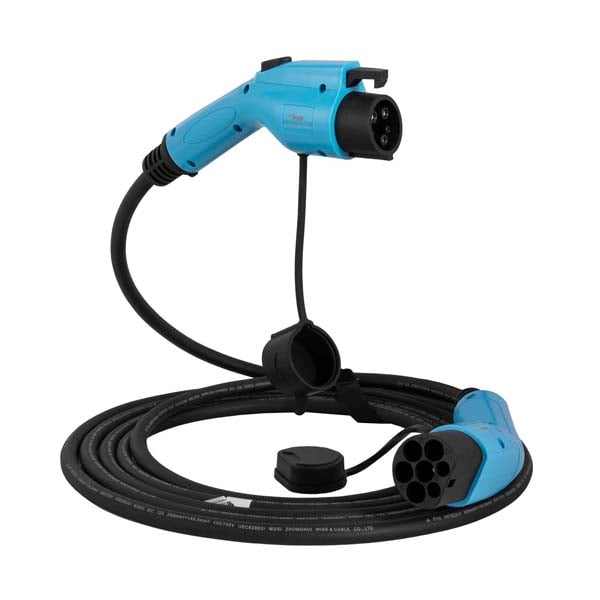
AK-EC-08 – Type 2 / Type 1 cable, single-phase, up to 7.2 kW, 6 m
The AK-EC-08 is a cable designed for cars with a Type 1 socket. The Type 2 end is connected to the socket at a public AC charging point, whilst the Type 1 connector is connected to the vehicle. This allows the car owner to use popular chargers fitted with a Type 2 socket and means they are not limited solely to the much less common charging points with a J1772 cable. The single-phase design, 32 A current and power output of up to 7.2 kW make this cable well-suited for charging many older models of electric cars and plug-in hybrids.
Safety and convenience – how to use an electric car charging cable correctly?
Once you have parked at a station with a Type 2 socket, connect the cable to your car and the charging point in accordance with the operator’s instructions. Then start the charging session using a card, RFID tag or app. Before charging begins, ensure that the connector is properly seated, has no play and is securely held in the socket.
Remember: for safety reasons, do not use a cable with visible damage; do not crush it with a wheel or door; do not submerge it in water; and do not use harsh chemicals to clean it. Once the charging session is complete, fit the protective caps, coil the cable into a loose loop and store it in the boot or in a dedicated storage bag. Proper use and storage of the cable helps to maintain its reliability and enhances safety for future charging sessions.
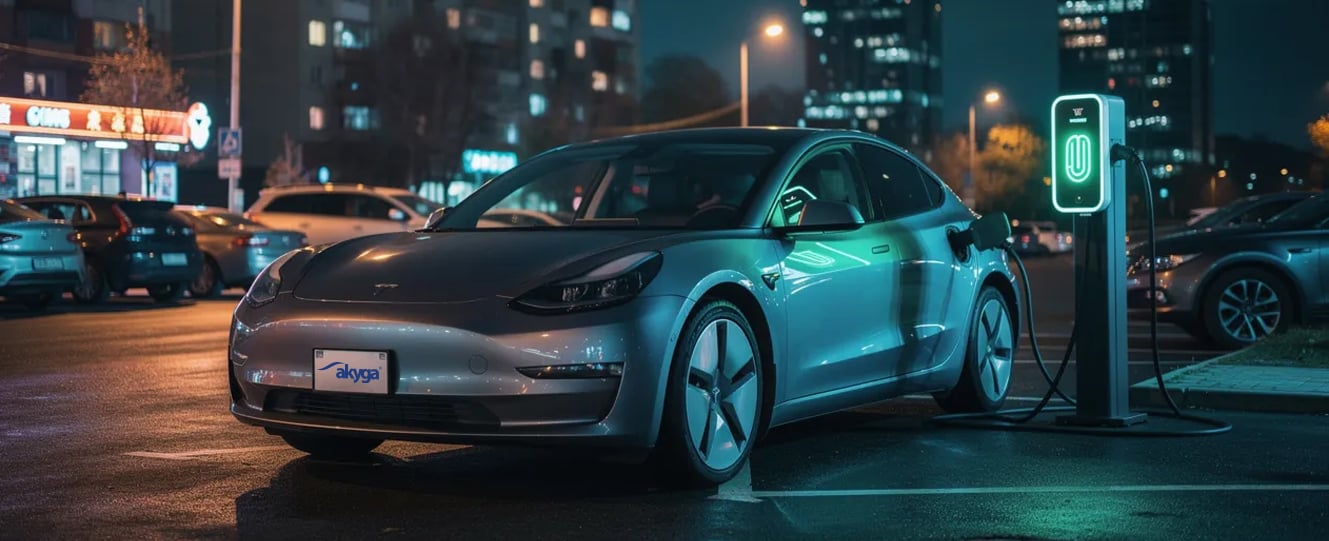
Summary – which EV charger cable should you choose?
Choosing the right cable depends primarily on three factors: the type of connector in your car, the maximum power of the on-board charger, and the locations where you plan to charge your car most often. The AK-EC-16 model is suitable for cars with a Type 2 connector and a three-phase on-board charger rated at 11–22 kW, the AK-EC-09 is a good choice for Type 2 vehicles charged via a single-phase supply with a power output of up to 7.2 kW, whilst the AK-EC-08 allows owners of cars fitted with a Type 1 socket to use AC charging stations.
A well-chosen, branded EV charging cable guarantees safety, reduces worries when travelling and makes everyday charging more convenient.

FAQ – frequently asked questions about electric car charging cables
Can a single cable be used with several different electric cars? ▼
Yes, provided that each car has the same type of socket, e.g. Type 2. It is also important to bear in mind that the maximum charging power will depend on the capabilities of the specific car and charging station.
Can a charging cable be left outside in winter? ▼
Branded charging cables are designed to withstand cold, rain and changing weather conditions. Nevertheless, once charging is complete, it is best to store the cable in the boot, garage or a dedicated cover to minimise dirt, moisture and natural wear and tear.
Will a 22 kW cable work with a 7.4 kW car? ▼
Yes. The car will automatically limit the current and charging power to its own capabilities, so a 22 kW cable will work correctly but will not speed up charging beyond the limit of the car’s on-board charger.
Can I use the same cable in different European countries? ▼
Yes. For AC charging, the Type 2 connector is the standard in most European countries, so a Type 2 / Type 2 cable will be the most versatile choice. Owners of cars with a Type 1 socket can, however, use a Type 2 / Type 1 cable, which allows them to connect their vehicle to public AC stations with a Type 2 socket.
Do I need a separate cable for 50–150 kW DC chargers? ▼
No. DC fast chargers have their own cable, which is why the AK-EC-08, AK-EC-09 and AK-EC-16 models are designed for AC charging, i.e. using charging stations, wallboxes and public charging points fitted with a socket.