
20 February 2026
The electric vehicle market is growing rapidly, and with it, the demand for convenient and safe home charging solutions. Having your own charger means independence from public EV stations, lower energy costs, and comfort of everyday use. In this article, we present the Akyga® charger range – from portable models to wallboxes – and advise you on how to choose the right devices for your vehicle and electrical installation.
Key information
-
Akyga® offers portable chargers and AC wallboxes with power ratings from 3 kW to 22 kW, covering Type1, Type2, and GB/T standards for Chinese electric cars.
-
Specific models in the range include the AK-EC-18 (Type1, 3.8 kW), AK-EC-19 (Type2, 3.8 kW), AK-EC-21 Wallbox (Type2, 11 kW), AK-EC-22 (Type2, 22 kW), and AK-EC-24 (GB/T, 22 kW).
-
Home charging from a single/three-phase socket or wallbox is usually cheaper than using fast DC stations and much more convenient on a daily basis.
-
The choice of charger depends on two factors: the type of socket in the car (Type1/Type2/GB/T) and the power of the electrical installation (1-phase/3-phase).
-
Safety is a priority – all Akyga® chargers have built-in safety features and an LCD display for parameter control.
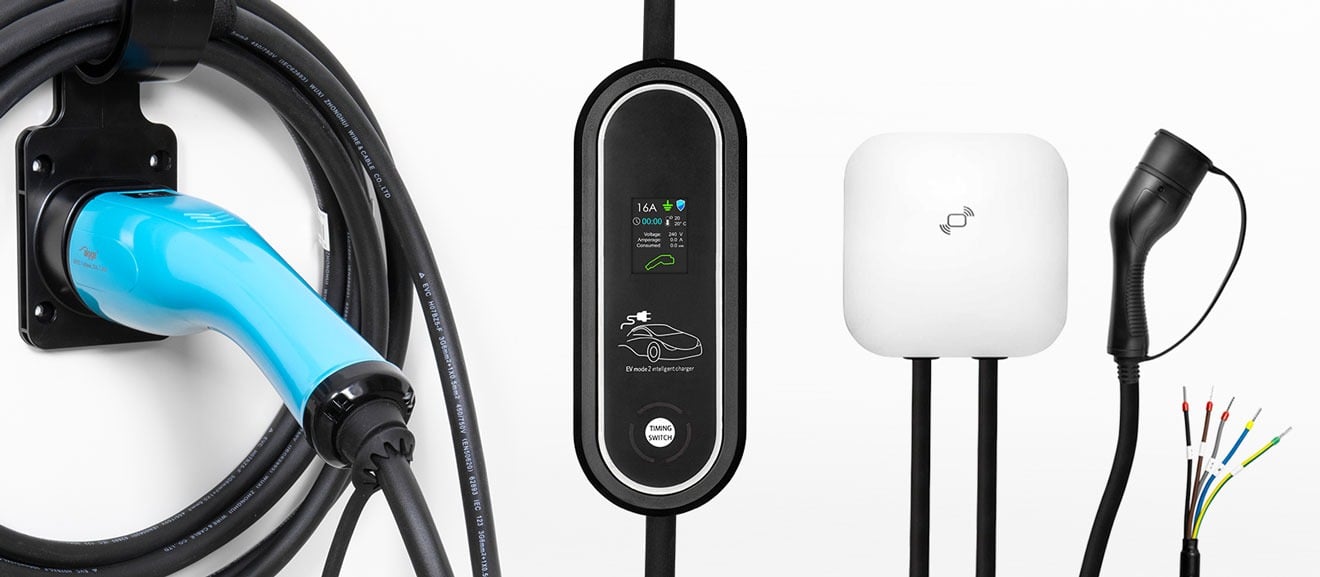
Electric vehicle chargers – the basics
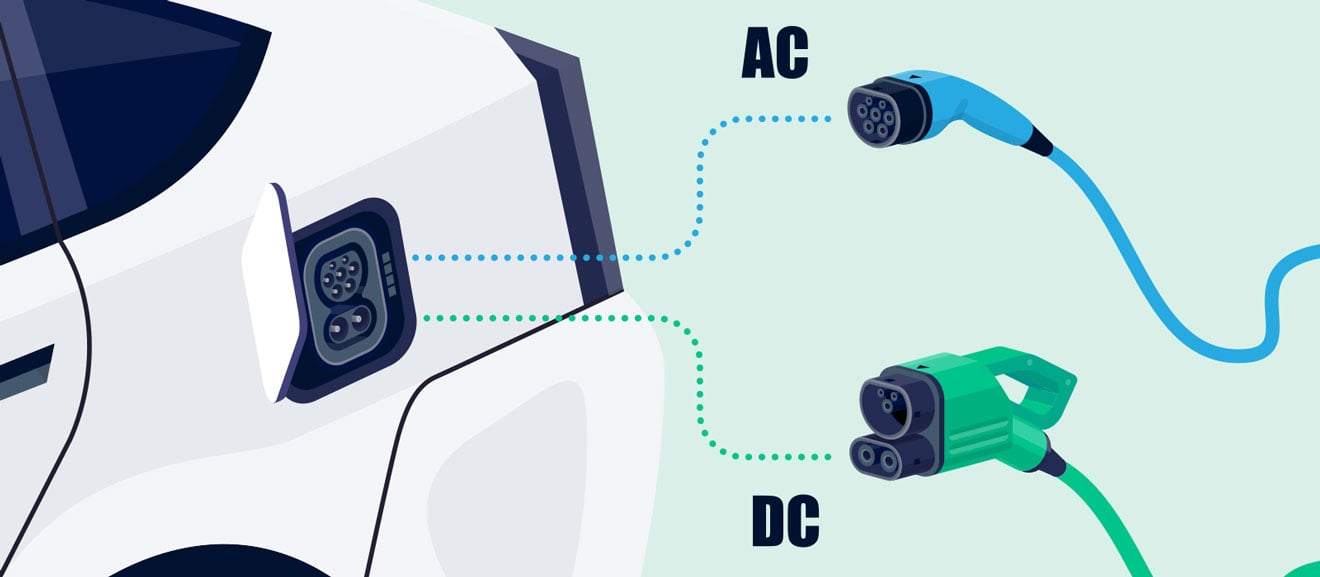
An EV or PHEV charger is a device that transfers electricity from the grid to the vehicle's battery. The basic difference between AC and DC charging is the location of the current conversion – in the case of alternating current (AC) charging, the conversion takes place in the car's on-board charger, while DC chargers supply direct current directly to the battery, bypassing this stage.
The European market for electric and PHEV hybrid cars has been growing steadily since 2020. Along with the growing number of vehicles, the network of public charging stations is also expanding. However, it is home infrastructure that remains the basis for daily charging for most drivers.
| Parameter | Description |
|---|---|
| Charger power (kW) | Determines the charging speed – the higher the power, the shorter the time |
| Phases | 1-phase (230 V) for power up to approx. 7.2 kW; 3-phase (400 V) for 11–22 kW |
| Connector types | Type 1 (USA, older models), Type 2 (European standard), GB/T (Chinese standard) |
| CEE | Industrial sockets with higher power (16 A or 32 A) |
The Akyga® range includes Mode 2 and Mode 3 AC chargers designed for safe, everyday charging of your car at home, at work, and on the road. Having your own charger means you are independent of commercial charging stations and can use cheaper energy, for example, on an off-peak tariff or from your own photovoltaic system.
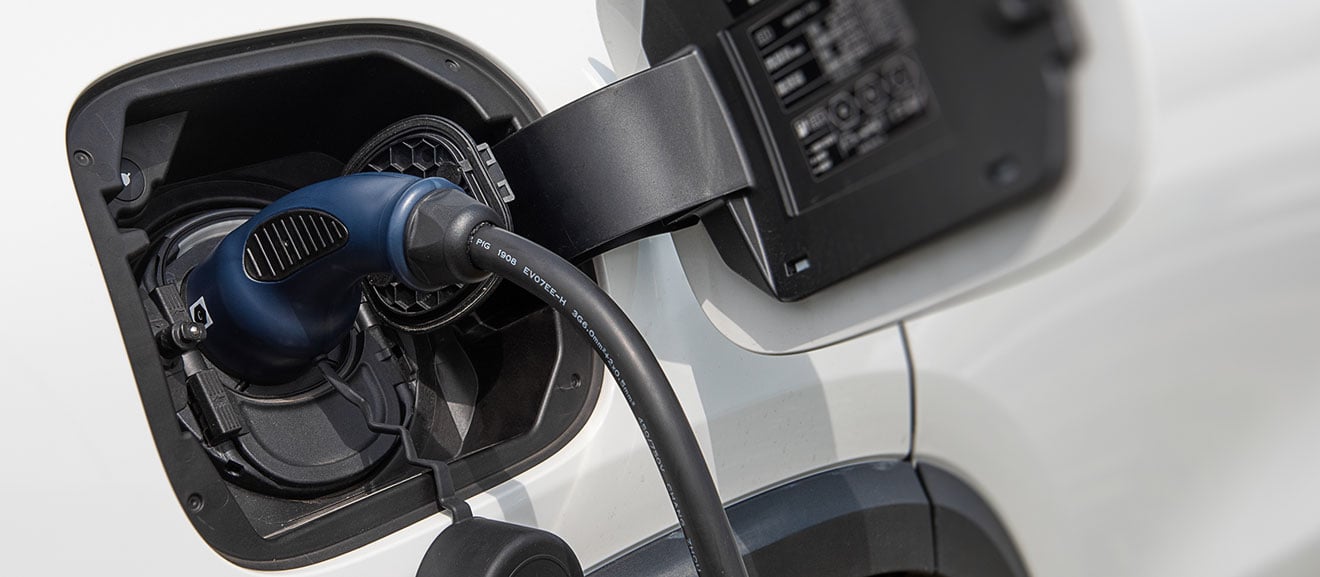
Akyga® portable chargers for electric cars
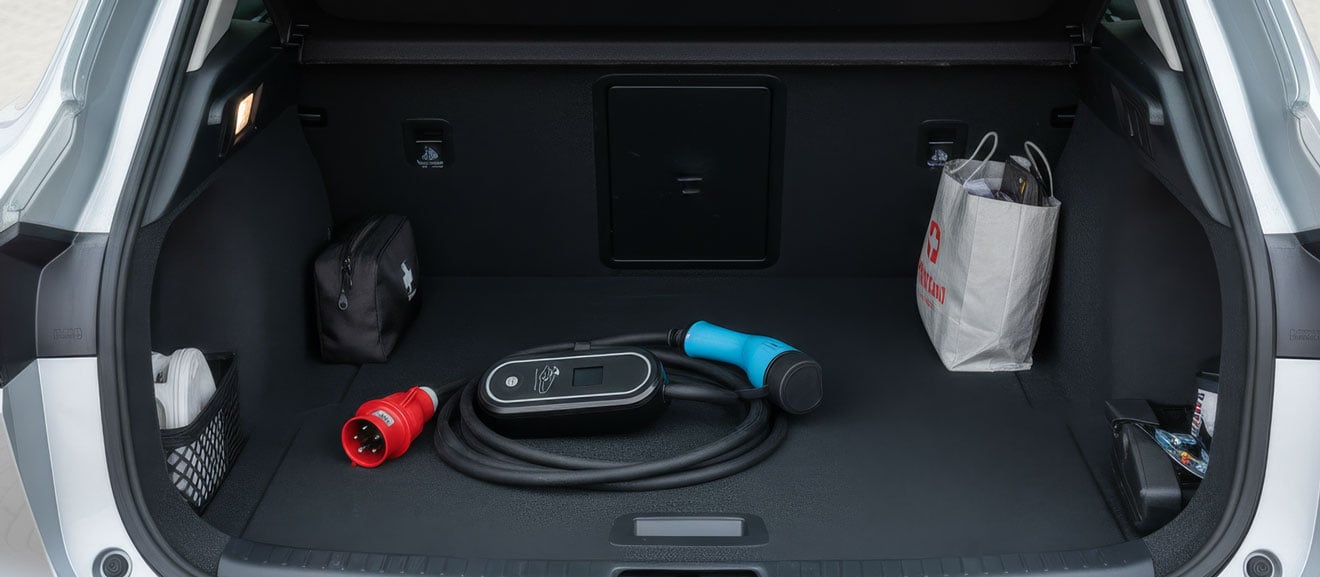
A portable EV charger is a compact device consisting of a cable with a mains plug, a vehicle connector and a control unit with an LCD display. This solution lets you charge wherever you have access to a suitable electrical socket.
Akyga® portable chargers are compatible with 230 V household sockets (including BS 1363 UK for the British market) and industrial CEE sockets (3-pin and 5-pin) with a current of 16-32 A. This means you can charge your car at home, at a friend's house, at work, or at a guesthouse – anywhere you can find a suitable power source.
The LCD display in the AK-EC series (e.g., AK-EC-18, AK-EC-19, AK-EC-23, AK-EC-24) allows you to monitor the charging current, session time, and energy consumption in real time. The 5 m cable length is a practical compromise between range and ease of storage in the trunk – the portable charger becomes a permanent piece of equipment for longer trips.
How much power do Akyga® portable chargers deliver?
The charging power depends on three parameters: current (A), number of phases, and voltage. For 1-phase 230 V and 16 A, we get approx. 3.7 kW, and for 3-phase 400 V and 32 A – up to 22 kW.
Single-phase 230 V, 16 A models (approx. 3.8 kW):
-
AK-EC-18 (Type1) – ideal for everyday charging of cars with a Type1 connector
-
AK-EC-19 (Type2) – a universal solution for European electric cars
-
AK-EC-23 (GB/T) – dedicated to Chinese electric vehicles
These models are perfect for overnight charging with typical daily mileage.
Model for the British market:
-
AK-EC-20 (BS 1363 UK / Type2, 1-phase, 13 A, 3 kW) – compliant with British socket standards
Single-phase 32 A models (approx. 7,2 kW):
-
AK-EC-14 (CEE 5-pin / Type2) – requires an industrial CEE outlet
-
AK-EC-15 (CEE 3-pin / Type1) – for Type 1 vehicles with a CEE socket installation
Three-phase 32 A models (approx. 11–22 kW):
-
AK-EC-12 (CEE 5pin / Type2, 3-phases, 16 A, 11 kW)
-
AK-EC-22 (CEE 5pin / Type2, 3-phases, 32 A, 22 kW)
-
AK-EC-24 (CEE 5pin / GB/T, 3-phases, 32 A, 22 kW)
These chargers are suitable for larger batteries and 400 V installations, providing fast charging with higher power.
Advantages of Akyga® portable chargers
Portable chargers are a “backup station” always at hand – whether you are at home or on the road.
Main advantages:
-
Compact size – easy to store in the trunk as part of your standard equipment
-
Versatility – different plug variants (CEE 3-pin, CEE 5-pin, BS 1363 UK) and vehicle standards (Type 1, Type 2, GB/T) in one product family
-
LCD display – full control of parameters: current, voltage, energy consumption, and possible errors
-
Built-in safety features – surge, overload, and overheating protection
-
Appropriate ingress protection rating – can be used outdoors in various weather conditions
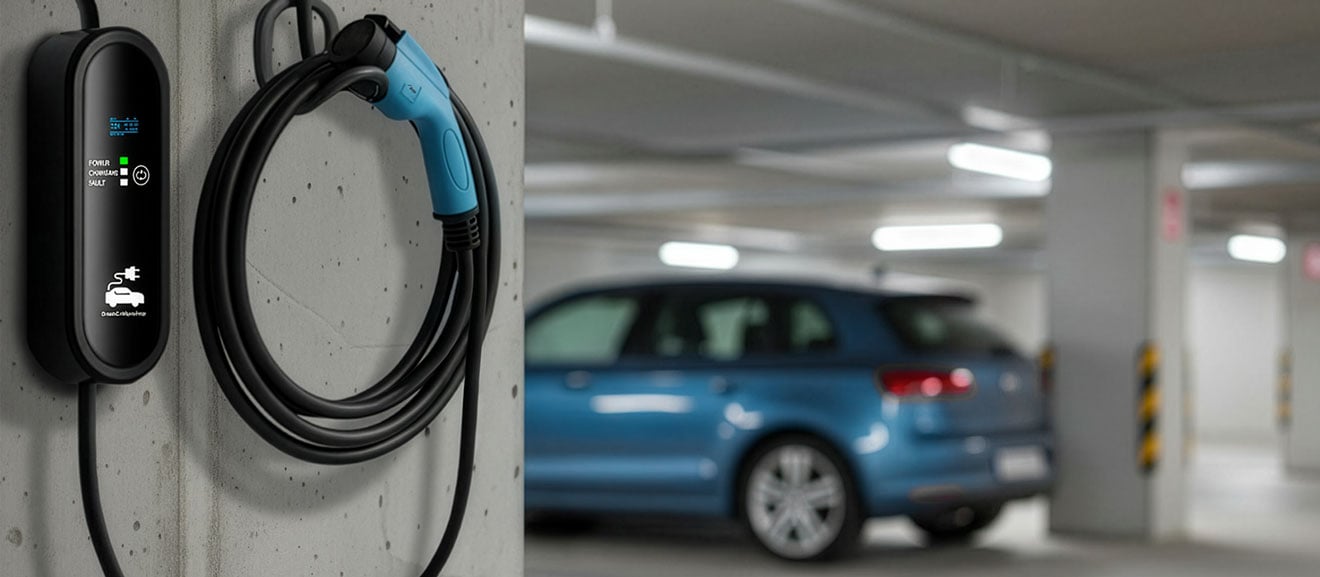
Home charging stations – Akyga® Wallbox
A wallbox is a fixed charging station mounted on a wall or pole, designed for faster AC charging in one place. Compared to a standard wall socket charger, a wallbox offers significantly more power – typically 11–22 kW – which translates into shorter charging times for large batteries. It is a complete, permanently installed device which, unlike a portable charger, does not need to be carried in the trunk.
An example of such a solution is the Akyga® AK-EC-21 Wallbox Type2 (3-phase, 16 A, 11 kW, 5 m). This is a typical solution for a home with a three-phase installation, providing the convenience of your own, always available charging station. At the same time, it does not place excessive demands on the building's connection. Night charging eliminates the need to search for public stations, and the elegant design makes the device look good in any garage.
A wallbox is a good investment, especially for mileage above 15-20 thousand km per year or when there are several electric vehicles in the household.
Power of Akyga® Wallbox home chargers
11 kW and 22 kW are now standard for AC wallboxes. The choice depends on the electrical installation capabilities and user needs.
| Pojemność baterii | 3.7 kW | 7.2 kW | 11 kW | 22 kW |
|---|---|---|---|---|
| 50 kWh | ~13.5 h | ~7 h | ~4.5 h | ~2.3 h |
| 75 kWh | ~20 h | ~10.5 h | ~7 h | ~3.5 h |
Advantages of AC charging with a wallbox
AC charging at home and fast DC charging on the road are different purposes – but for most drivers, AC is the primary charging method.
Battery benefits – charging with lower-power alternating current is less stressful on the cells than frequent use of high-power DC chargers. This translates into less battery degradation.
Comfort of use:
-
Your car is always charged in the morning
-
The ability to charge during periods when electricity is cheaper
-
Compatibility with photovoltaics – maximum use of your own energy
Safety – a dedicated circuit, electrical safeguards, and communication with the vehicle in accordance with its standard guarantee safe charging.
The Akyga® wallbox with a Type 2 cable will support most European car brands: VW, Škoda, Renault, Mercedes, BMW, Audi, Hyundai, Kia and many others.
Where to install the wallbox?
The installation location affects convenience and equipment safety. A well-chosen spot lets you get the most out of your charger.
Typical locations:
-
Garage (inside or on an exterior wall)
-
Carport
-
Building wall next to the parking space
-
Post by the driveway
Practical selection criteria:
-
Distance from the parking space – your own 5 m cable should easily reach the car's socket
-
Protection from rain and direct sunlight
-
Easy access to the electrical switchboard
Installation should be carried out by a licensed electrician, especially for 3-phase installations.
AC chargers vs DC stations – which to choose for everyday use?
Comparing AC charging (home, workplace) and DC charging (travel, quick top-ups) shows clear differences in use and cost.
| Parameter | AC Charging | DC Charging |
|---|---|---|
| Typical power | 3.0–22 kW | 50–150 kW (and more) |
| Application | Daily use | Travel, quick top-up |
| Energy cost | Lower (home tariff) | Higher (commercial stations) |
| Impact on the battery | Mild | Greater load |
| Availability | Own charger | Public stations |
DC charging at public stations is more expensive and puts more strain on the battery, so it’s best treated as a supplement rather than the main charging method. An Akyga® home charger lets you use cheaper electricity and avoid queues at public stations.
Even users of PHEV hybrids with small batteries (10-15 kWh) will find it very convenient to have a 3.0-3.8 kW charger at home. Overnight charging ensures full electric range for daily commutes.
How to choose an Akyga® charger for your car and installation?
Choosing the right charger requires analyzing several key factors. Below you will find practical tips to help you make your decision.
Vehicle inlet type – this is the basis of your choice. Akyga® offers EV chargers for three standards:
-
Type1: AK-EC-15, AK-EC-18
-
Type2: AK-EC-12, AK-EC-14, AK-EC-19, AK-EC-20, AK-EC-21, AK-EC-22
-
GB/T (Chinese vehicles): AK-EC-23, AK-EC-24
Check your car’s manual or technical specification to confirm which connector is required.
Building installation – the differences between 1-phase 230 V and 3-phase 400 V directly affect the maximum charging power. Household sockets allow for a power of up to approx. 3.8 kW, CEE 16/32 A sockets and wallboxes – up to 22 kW with a three-phase installation.
Battery capacity and daily mileage:
-
Battery up to 40 kWh and typical city use – charging power of 3.0–3.8 kW is often sufficient,
-
Battery above 50 kWh and intensive use – 7.2–22 kW is worth considering.
Mobility – if you travel frequently, a portable charger with LCD (e.g., AK-EC-19, AK-EC-23) should be kept in the trunk as “just in case” equipment.
If you’re unsure, contact an Akyga® technical advisor or electrician who will assess your installation and help you choose the optimal solution.
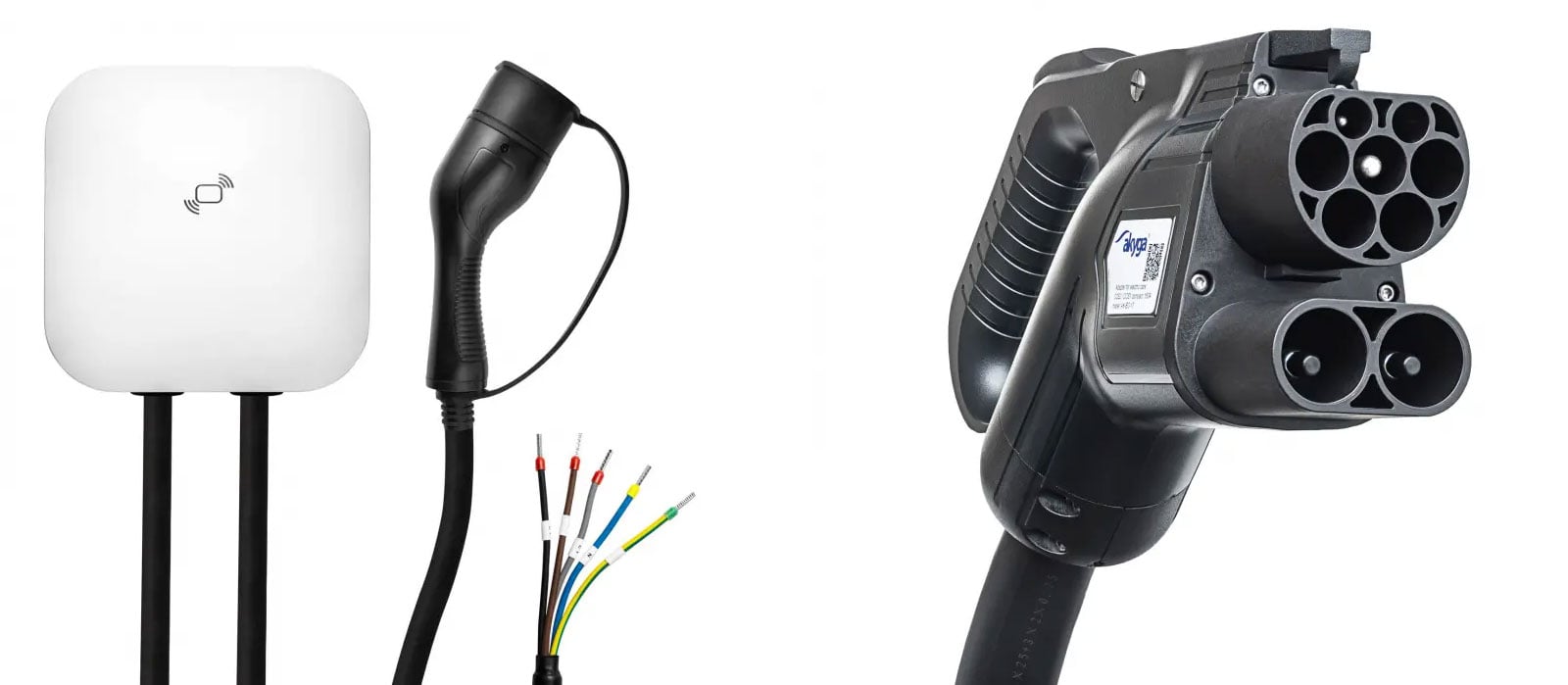
Examples of Akyga® charger models – comparison
The following examples will help you quickly familiarize yourself with the store's offer and choose a product for your specific needs.
Type 1 Models
| Model | Power Supply | Current/Power | Cable | Application |
|---|---|---|---|---|
| AK-EC-18 | 1-phase 230 V | 16 A / 3.8 kW | 5 m | Daily home charging of Type 1 cars |
| AK-EC-15 | CEE 3-pin, 1-phase | 32 A / 7.2 kW | 5 m | Faster charging from a power outlet |
Type 2 Models
| Model | Power Supply | Current/Power | Cable | Application |
|---|---|---|---|---|
| AK-EC-19 | 1-faza 230 V | 16 A / 3.8 kW | 5 m | Basic portable charger |
| AK-EC-20 | BS 1363 UK, 1-phase | 13 A / 3 kW | 5 m | UK market |
| AK-EC-12 | CEE 5pin, 3-phases | 16 A / 11 kW | 5 m | Fast three-phase charging |
| AK-EC-14 | CEE 5-pin, 1-phase | 32 A / 7.2 kW | 5 m | Compromise between power and installation |
| AK-EC-21 | Wallbox Type2, 3-phases | 16 A / 11 kW | 5 m | Permanent home station |
| AK-EC-22 | CEE 5pin, 3-phases | 32 A / 22 kW | 5 m | Maximum AC power |
GB/T Models (Chinese cars)
| Model | Zasilanie | Current/Power | Cable | Application |
|---|---|---|---|---|
| AK-EC-23 | 1-phase 230 V | 16 A / 3.8 kW | 5 m | Basic charging for cars from China: BYD, NIO, Xpeng, BMW, Lotus, etc. |
| AK-EC-24 | CEE 5pin, 3-phases | 32 A / 22 kW | 5 m | Fast charging for Chinese EVs |
GB/T models are designed for vehicles with a GB/T socket – check your car's specifications before purchasing.
FAQ – frequently asked questions about Akyga® electric vehicle chargers
This section answers practical questions that were not covered in the main part of the article. The answers are intended to dispel doubts about safety, installation, compatibility, and the impact on electricity bills. The FAQ may be expanded in the future based on customer queries.
Can I charge my electric car from a standard 230 V outlet?
Yes, using a suitable portable charger (e.g., AK-EC-18, AK-EC-19, AK-EC-23). The socket must be earthed and in good technical condition. If you plan to use a socket regularly for several hours a day, we recommend having an electrician inspect your installation.
The power of 3.0–3.8 kW extends the charging time compared to high-power solutions, but it is fully sufficient for night-time energy replenishment with typical daily mileage.
Are Akyga® chargers resistant to rain and low temperatures?
Akyga® chargers are designed for outdoor use, with appropriate IP ratings – details can be found in the product data sheets. We recommend installing wallboxes in a sheltered location (under a roof, in a garage), although the device itself is resistant to typical weather conditions.
The cables remain flexible over a wide range of temperatures. In extreme cold, charging time may be longer due to the operation of the car's battery heating system – this is normal behavior for the vehicle, not the charger.
Will a higher charger power (e.g., 22 kW) always reduce the charging time of my car?
Not always. Charging time also depends on the maximum AC charging power supported by the car's on-board charger. If the car accepts a maximum of 7.4 kW, connecting to a 22 kW charger (AK-EC-22) will still limit the actual output to 7.4 kW.
Before choosing a charger, check the vehicle specifications in the manual, technical data sheet, or manufacturer's configurator.
Do I need special safety devices in the switchboard for the charger?
For 16-32 A chargers, especially three-phase ones, dedicated overcurrent and residual current protection devices selected by an electrician are recommended. Some Akyga® solutions have integrated safety devices, but the installation should always comply with current electrical standards.
Proper safety devices increase the safety of the user, the vehicle, and the entire electrical installation in the building.
How does charging a car affect electricity bills?
Energy consumption is measured in kWh. For example, charging 40 kWh at a price of €0.3/kWh costs approximately €12. If you charge mainly at home (off-peak tariff, PV), the cost per 100 km can be significantly lower than with internal combustion cars.
Regular use of the Akyga® charger at home allows you to predict and optimize your costs. Compared to public DC stations, where the lowest price is still higher than the home tariff, the savings are noticeable.
See the full range of Akyga® electric vehicle chargers on our store website. Whether you are looking for a portable charger for trips or a wallbox for your garage, you will find a solution tailored to your needs. If you have any questions, please contact our technical department, which will help you choose the right product for your car model and electrical installation.